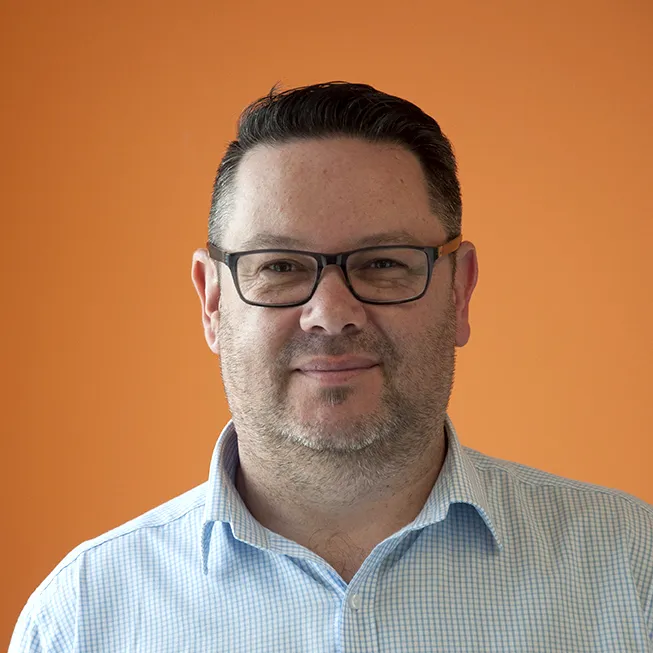
Hi, I'm Daryl Cook. I work with men facing the silent pressures of midlife, helping you find a steadier centre when you're running on empty.
Why Second Wind exists
Responsibilities stack up over time, and a heavy load stays in place for years without a pause or much support. Complaining doesn't happen easily when you're used to being reliable, competent, and steady.
Eventually, that cumulative weight shows up in the body. Sleep stops restoring your energy. Physical tension becomes a default baseline, and the edges feel much closer. You carry a quiet sense that things need to change, even if it's hard to name what yet.
Midlife isn't a failure point. It's simply the threshold where your nervous system asks for a reset – not through more analysis or effort, but by slowing down long enough to recalibrate.
The work
Breathwork meets the nervous system directly through the body. It isn't performance-based, it isn't confrontational, and it doesn't push you to break open.
The mind handles stress mentally, but that stress settles physically. It alters your breath patterns, tightens your muscle tone, changes your posture, and maintains a high baseline of alertness. Breathwork works directly at that physical level.
Because breathwork alters blood chemistry and physiological holding, approaches that can help can also potentially harm. That's true for most effective health practices. For this reason, safety begins before any practice starts. Certain health conditions – including cardiovascular issues, severe asthma, epilepsy, and acute psychiatric conditions – require careful screening and adapted approaches. Checking your medical history isn't a formality. It’s simply about understanding the baseline of your system and meeting it where it is.
Much of the wider discussion around adverse effects in breathwork focuses on active, fast-paced techniques that can rapidly elevate arousal. My work centres on balanced, coherent breathing – a slower, steady rhythm that supports nervous system regulation without forcing an intensity your system isn't ready for.
Practising with care signals safety to your physiology and drops the chronic stress response. Long-held patterns of protective tension begin to soften, not through intensity, but because your system finally has the space to settle. It's not about emotional catharsis. It's about regulation, which forms the foundation of sustainable strength.
This work respects your independence, privacy, and boundaries. As a trauma-informed practice, it provides complete agency to you. You remain in control of the pace, depth, and duration of every session. There's no pressure to perform, explain your past, or fix anything. Stepping back, slowing the rhythm, or opening your eyes is always an option.
My role as a facilitator is not to direct, interpret, or push. It’s to hold a steady, regulated space, respecting your body's innate timing rather than driving an outcome. When your system settles, perspective returns naturally. You don't become someone new. You come back to yourself.
The work rests on a few realities:
- you're not broken
- safety creates change faster than force
- calm is a skill you practice, not a personality trait
The goal isn't dependency, transformation, or identity change. The goal is simply steadiness.
My story
For a long time, my own response to exhaustion, brain fog, physical heaviness, and internal flatness was to tighten my grip and push harder. I didn't recognise those states as warning signals. I saw them as obstacles to clear through force.
Eventually, it became clear that pushing harder wasn't going to help. I didn't need more motivation, productivity, or insight. I needed regulation. My system didn't need an analysis. It needed to stand down.
Breathwork entered my life as a practical support for recovery rather than a concept to master. Practised consistently, it reduced my background stress and restored clarity and presence. It didn't involve revisiting the past or forcing an outcome; it simply gave my nervous system permission to settle.
Heart-centring meditation became a reliable daily anchor. Returning to the breath and the heart gradually recalibrated how I met the world. Over time, I felt more grounded, centred, and available to my life again.
That turn is what led me into formal training, and it's why I started Second Wind.
Training & Memberships
My work is grounded in lived experience, formal training, and decades of facilitation. I'm committed to practising responsibly within clear ethical boundaries, with care for both the individual and the wider context.
- I completed my professional Breathwork training with the Australian Breathwork College, including certification in Core Clearing Breathwork – a trauma-informed approach focused on gentle nervous system regulation.
- I'm a Member of the International Institute for Complementary Therapists (IICT), adhering to established safety parameters, ethical guidelines, and professional referral standards.

Men's health
Second Wind exists partly because men's health – particularly mental health – is often addressed late, when the system has already been under strain for too long. I care about supporting men to feel steadier and more grounded, without pressure or stigma.
As part of that commitment, 5% of Second Wind income is donated to organisations supporting men's mental health and meaningful connection.
Helping people move past the fear that prevents them from seeking mental health support.
Creating safe, consistent spaces for men to build connection and talk openly.
This isn't about fixing men or redefining masculinity. It's about supporting steadiness, connection, and sustainable wellbeing.
If this matches where you are, you're welcome to book a clarity call – a short, informal 30‑minute conversation to explore the work and see if it's the right place for you to land.
You haven’t lost your strength. You’ve just been running without a pause.